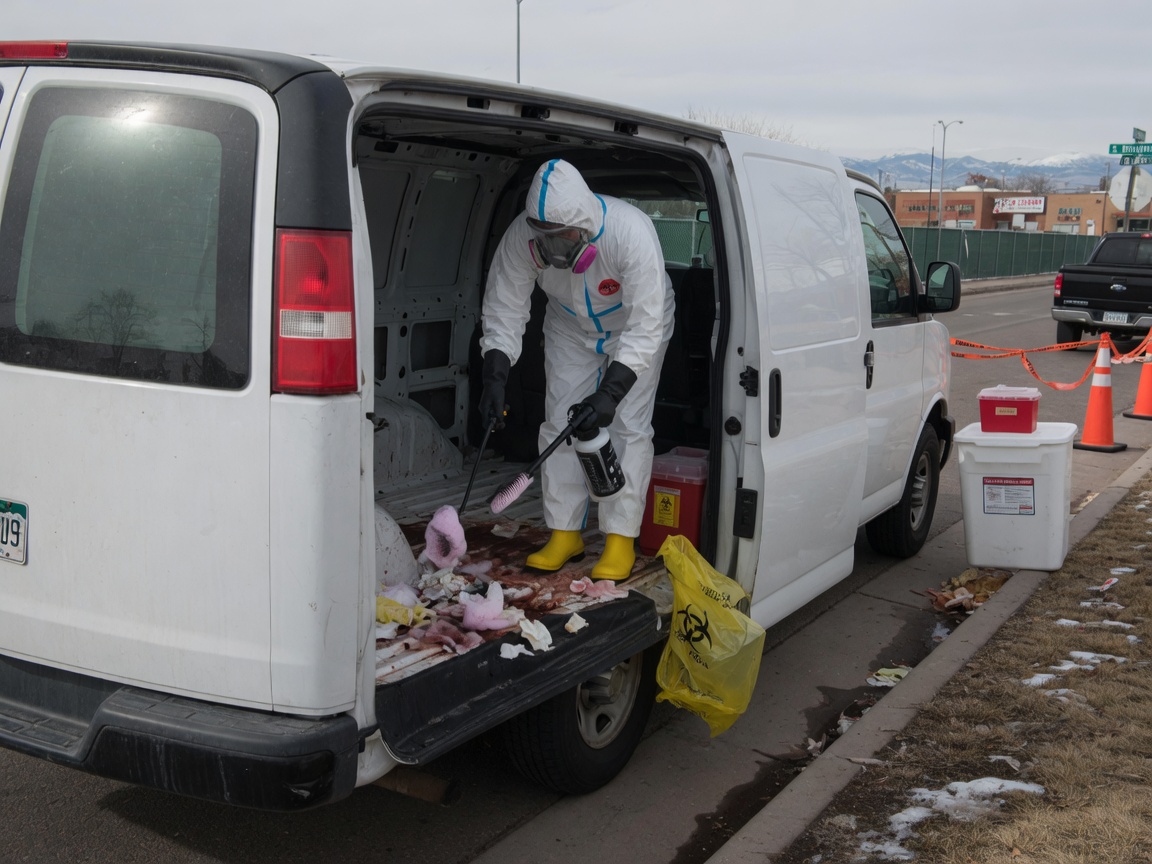
Vehicle Biohazard Cleanup in Denver, CO
Blood and bodily fluids inside a vehicle can spread into carpet, seat foam, upholstery, floor areas and other materials that ordinary cleaning may not fully address. Denver BioClean Pros provides discreet vehicle biohazard cleanup for cars, trucks and other vehicles affected by biological contamination.
Vehicle Blood and Trauma Cleanup
Vehicle cleanup may be needed after an accident, injury, unattended death or other traumatic incident involving blood or bodily fluids. We inspect the affected areas, establish protection as appropriate, remove contaminated materials when necessary, and clean and disinfect restorable surfaces within the agreed scope.
What We Inspect and Clean
The assessment can include seats, upholstery, carpet, floor areas, trunk or cargo space and other accessible surfaces. The required work depends on the material and how far contamination has traveled, including whether affected padding or other porous components need removal.
Fleet and Commercial Vehicle Cleanup
Cars, trucks, vans and other business vehicles can require biohazard cleanup after an incident. We can assess the vehicle and coordinate the scope with the responsible business contact based on access and the extent of contamination.
Vehicle Biohazard Cleanup Process
The process generally starts with a vehicle assessment, followed by appropriate work-area protection and PPE, removal of affected materials when required, cleaning and disinfection, biohazard waste handling and a final review.
Related Denver Cleanup Services
If the vehicle contamination is connected to a larger incident, see our Crime Scene Cleanup page. For blood-specific cleanup information, see Blood Cleanup.
Need Vehicle Biohazard Cleanup in Denver?
If a vehicle has been affected by blood or bodily fluids, avoid unnecessary contact with the contaminated area and contact Denver BioClean Pros to discuss an assessment and cleanup scope.
Related Denver Services
For related cleanup needs, see our Traffic Accident Cleanup, Biohazard Disinfection & Sanitization service pages.
Technician insight
Vehicle interiors contain many layers—carpet, padding, seat foam and trim. When biological contamination moves below the visible surface, cleaning the stain alone may not address the full affected area.
Vehicle Cleanup After a Medical Incident
A vehicle required cleanup after blood and bodily-fluid contamination affected the rear seating area and floor. The assessment identified the affected materials, and the cleanup scope covered removal where needed, surface disinfection and a final review.
Vehicle Biohazard Cleanup Services We Offer
✓Vehicle Blood Cleanup
Removal and decontamination of blood from seats, carpet, upholstery and other affected vehicle surfaces.
✓Trauma Vehicle Cleanup
Cleanup after accidents, injuries and other traumatic incidents involving biological contamination.
✓Vehicle Odor Treatment
Assessment and treatment of persistent odors associated with biological contamination.
✓Fleet Vehicle Biohazard Cleanup
Biohazard cleanup for business and fleet vehicles affected by blood or bodily fluids.
✓Sharps Cleanup
Safe assessment and removal of contaminated sharps found inside a vehicle when included in the cleanup scope.
Vehicle Biohazard Cleanup Cost in Denver, CO
| Service | Typical Range | What Affects It |
|---|---|---|
| Passenger vehicle cleanup | Contact for an estimate | Depends on affected seats, carpet and floor areas |
| SUV or truck cleanup | Contact for an estimate | Scope varies with interior size and contamination |
| Vehicle odor treatment | Contact for an estimate | Depends on source and extent of odor |
| Fleet vehicle cleanup | Contact for an estimate | Pricing depends on vehicle type and number of affected areas |
Ranges are typical for Denver, CO and confirmed with an exact written quote before any work starts.
How it works
- 1
Vehicle Assessment
We inspect accessible interior areas and identify visible and potential contamination before establishing the cleanup scope.
- 2
Containment and PPE
The affected area is isolated as practical and technicians use appropriate protective equipment for the work.
- 3
Cleaning and Removal
Contaminated materials are cleaned and disinfected when restorable; materials that cannot be safely restored are removed when required.
- 4
Final Review
We inspect the completed vehicle and review any remaining recommendations with the owner or responsible party.
Pricing
Vehicle biohazard cleanup pricing depends on vehicle size, affected materials, contamination extent and any required disassembly or material removal.