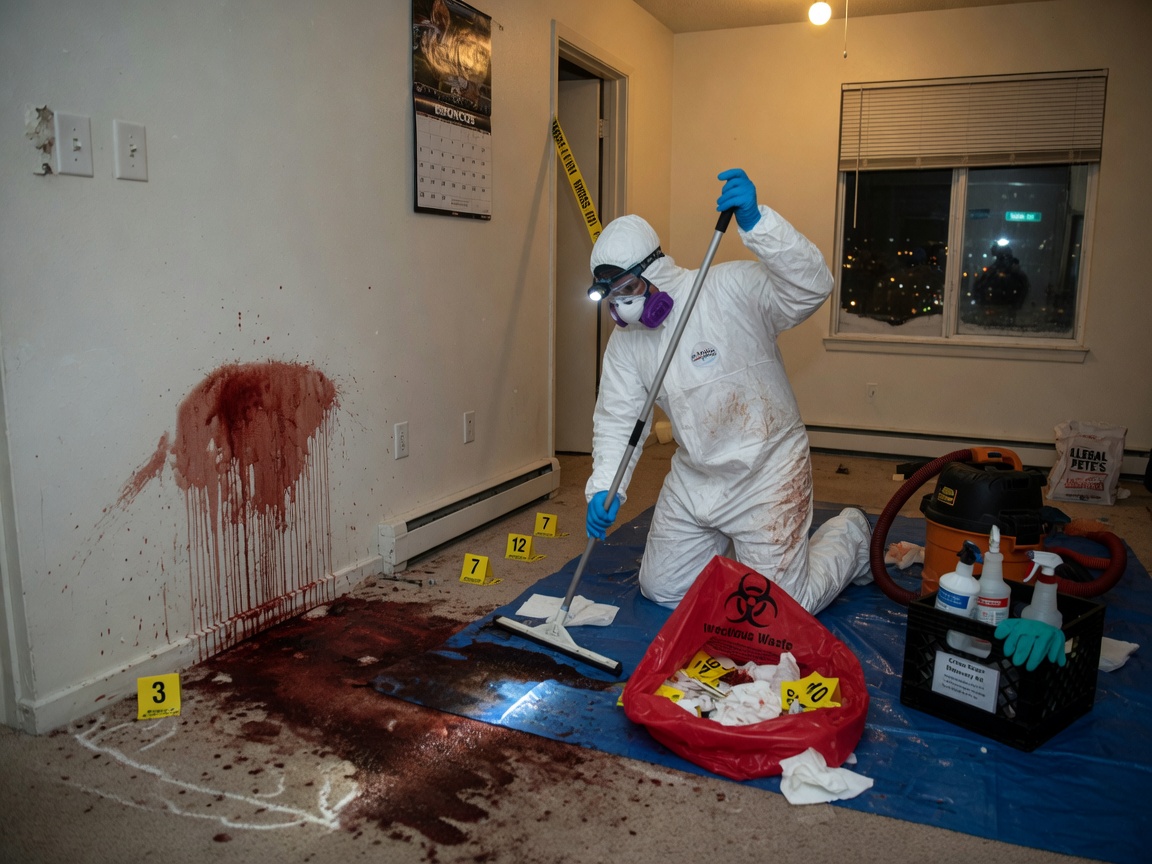
Crime Scene Cleanup in Denver, CO
Crime scene cleanup in Denver can involve blood, bodily fluids, damaged materials and odors that ordinary cleaning cannot safely address. Denver BioClean Pros provides discreet cleanup for homes, apartments, businesses and vehicles after law enforcement or another authorized party releases the property for cleaning.
Blood, Trauma and Biohazard Cleanup
Blood and biological material can move into carpet, flooring, drywall, baseboards, upholstery and other porous materials. We assess the affected area, establish containment when appropriate, remove materials that cannot be safely restored, and clean and disinfect remaining surfaces within the agreed scope.
Unattended Death and Homicide Scene Cleanup
An unattended death or homicide can leave contamination beyond the area that is immediately visible. Our cleanup scope can include affected flooring, furnishings, walls and other materials, with odor treatment considered when biological contamination has remained in place.
Residential and Commercial Crime Scene Cleanup
We serve Denver homes, apartments, rental properties, offices and other commercial spaces. For multi-unit properties, we can coordinate access with the property contact and work to keep unaffected areas separated from the cleanup zone.
What Happens During Crime Scene Cleanup
The process generally starts with an assessment and scope of work, followed by appropriate containment and PPE, removal of affected materials when necessary, cleaning and disinfection, biohazard waste handling and a final review. The exact work depends on the contamination, affected materials and property conditions.
Related Denver Biohazard Services
Crime scene cleanup can overlap with other specialized services. See our Blood Cleanup, Trauma Cleanup, Homicide Cleanup and Biohazard Decontamination pages for more information.
Need Crime Scene Cleanup in Denver?
If a property has been released for cleanup, contact Denver BioClean Pros to discuss the affected area and next steps. Avoid unnecessary contact with biological contamination until the cleanup scope has been assessed.
Technician insight
A scene can look limited while contamination has reached porous flooring, carpet, drywall or furnishings. The assessment is important because removing only the visible material can leave affected areas behind.
Cleanup After an Unattended Death
After an authorized property release, the cleanup scope identified contamination around flooring and nearby furnishings. The affected materials were isolated, removed where necessary, and the remaining surfaces were cleaned and disinfected before the final walkthrough.
Crime Scene Cleanup Services We Offer
✓Bloodstain Removal
Removal and decontamination of blood from affected flooring, walls, furnishings and other surfaces.
✓Trauma Scene Cleanup
Cleanup and disinfection after accidents or traumatic incidents involving blood or bodily fluids.
✓Unattended Death Cleanup
Remediation of contamination and odor after an unattended death, including affected porous materials when required.
✓Homicide Cleanup
Discreet cleanup of blood and biological contamination after an authorized homicide scene release.
✓Vehicle Biohazard Cleanup
Cleanup of blood and biological contamination inside vehicles after an incident.
Crime Scene Cleanup Cost in Denver, CO
| Service | Typical Range | What Affects It |
|---|---|---|
| Single-room cleanup | Contact for an estimate | Scope depends on contamination and affected materials |
| Multi-room cleanup | Contact for an estimate | Pricing depends on the number of affected areas and removal required |
| Vehicle biohazard cleanup | Contact for an estimate | Depends on vehicle size and extent of contamination |
| Unattended death cleanup | Contact for an estimate | Depends on contamination, odor and structural material involvement |
Ranges are typical for Denver, CO and confirmed with an exact written quote before any work starts.
How it works
- 1
Assessment and Scope
We review the affected area, identify visible and hidden contamination, and explain the cleanup scope before work begins.
- 2
Containment and PPE
The work area is isolated as appropriate and technicians use the protective equipment required for the cleanup.
- 3
Removal and Cleaning
Affected materials are removed when they cannot be safely restored. Remaining surfaces are cleaned and disinfected.
- 4
Final Inspection
We review the completed area, address remaining cleanup needs within the agreed scope, and provide available service documentation.
Pricing
Pricing varies with the size of the affected area, contamination type, materials involved and amount of removal required. A scope can be provided after the initial assessment.