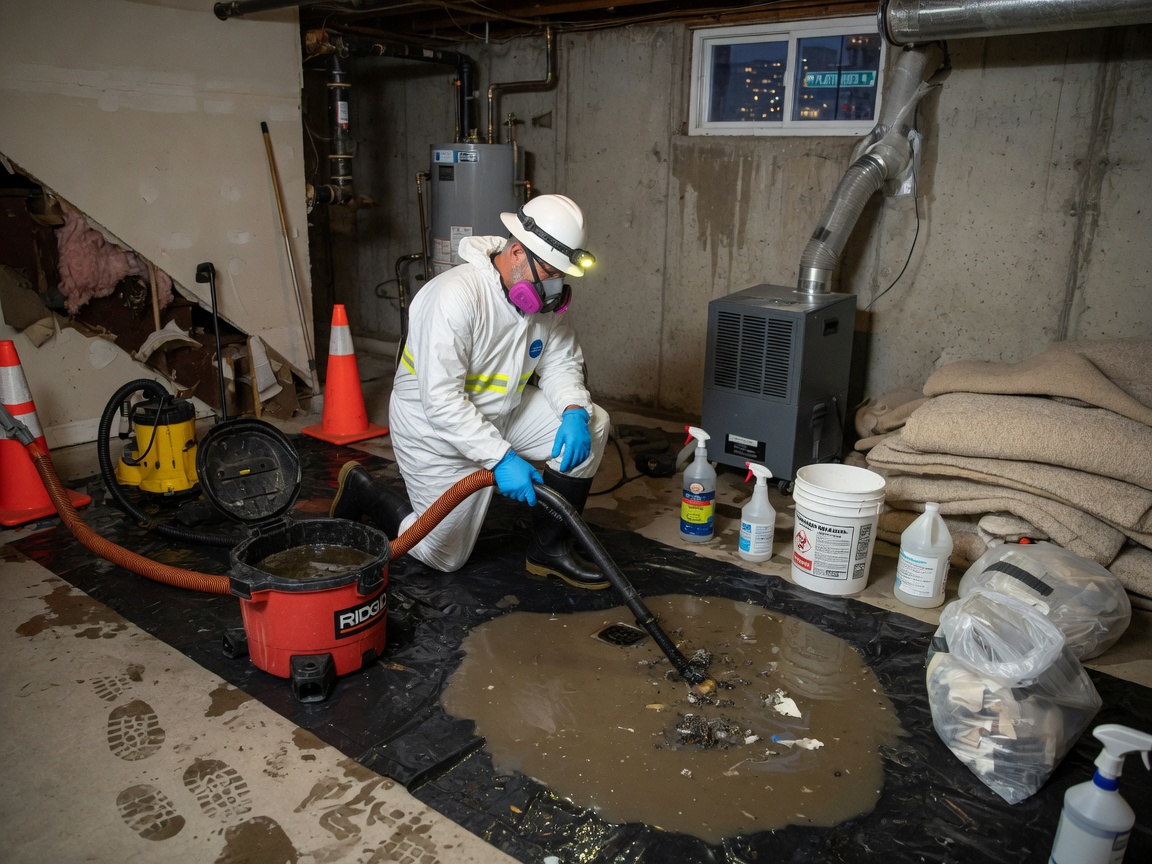
Denver's older housing stock in Capitol Hill, Baker and Five Points often features clay or cast-iron sewer lines installed decades ago. These lines crack or separate when tree roots from mature plantings along Washington Park streets push through joints. Afternoon thunderstorms common in summer drop heavy rain in short bursts, sending stormwater into already overloaded mains and pushing raw sewage into basements. Crews must map moisture with thermal cameras because brick foundations and dirt crawl spaces in these neighborhoods hold water longer than newer slab homes in Stapleton.
Semi-arid conditions mean winter freezes followed by rapid thaws can heave soil around shallow sewer laterals in Highland and Sunnyside. When backups occur, the mixture of sewage and stormwater carries fine silt that settles into hardwood subfloors and behind baseboards. Technicians remove and bag saturated drywall up to eighteen inches above the water line, then treat concrete with EPA-registered disinfectants before drying with commercial air movers. Failure to address hidden pockets leaves odors that return weeks later when humidity spikes again.
Work in multi-unit buildings in LoDo and RiNo requires coordination with property management because shared stacks can send contamination to units above and below. All waste is transported to permitted facilities outside Denver County; no material is rinsed into storm drains along the South Platte. Homeowners in Cherry Creek and Montclair frequently request post-cleanup air sampling to confirm spore counts have returned to background levels before reoccupying finished spaces.
Nearby cities such as Aurora, Lakewood and Centennial see similar calls after the same regional storms, but Denver County jobs often involve tighter alley access and older electrical panels that limit equipment placement. The team works within posted hours—Monday through Friday 8am–6pm and Saturday 9am–2pm—scheduling larger projects across consecutive days to stay compliant with local noise ordinances.
Related Denver Services
For related cleanup needs, see our Feces & Urine Cleanup, Biohazard Disinfection & Sanitization, Biohazard Decontamination, C. diff Cleanup service pages.
Technician insight
In Denver, the thing that catches most people out with Sewage Backup Cleanup is how summer thunderstorms push silt into the joints of 1920s-era clay pipes under Capitol Hill and Baker; once that silt dries it locks odors into the slab that standard cleaners miss unless you grind and seal the concrete.
Baker Row Home After July Storm
Sewage backed up through the floor drain after a heavy afternoon thunderstorm. We found water had wicked three feet up the plaster walls and under the original hardwood. Extraction and wall removal took one day; we then dried the joist bays and treated the slab before the owners could safely return.
Sewage Backup Cleanup Services We Offer
✓Residential Sewage Extraction
Pump-out and removal of standing wastewater from basements and crawl spaces in single-family homes throughout Denver County.
✓Commercial Backup Remediation
Containment, extraction and disinfection for restaurants, offices and retail spaces in LoDo, RiNo and Union Station corridors.
✓Storm-Related Sewage Cleanup
Rapid response after summer thunderstorms that overwhelm combined sewers in low-lying blocks of Baker, Highland and Five Points.
✓Contaminated Flooring Removal
Safe disposal of saturated carpet, pad, hardwood and tile in homes built before 1970 where sewage has wicked into subfloors.
✓Odor Elimination and Air Scrubbing
HEPA air scrubbing and hydroxyl treatment to neutralize hydrogen sulfide and ammonia odors trapped in older brick and plaster structures.
✓Structural Drying and Moisture Mapping
Thermal imaging and targeted drying of concrete slabs and wall cavities common in Capitol Hill and Washington Park properties.
Sewage Backup Cleanup Cost in Denver, CO
| Service | Typical Range | What Affects It |
|---|---|---|
| Initial Assessment Visit | $150–$300 | Waived if remediation proceeds; covers Denver County travel |
| Small Basement Extraction | $800–$1,600 | Under 500 sq ft with no hidden wall damage |
| Full Crawl Space Remediation | $2,200–$4,500 | Includes silt removal and concrete treatment in older homes |
| Multi-Room Odor Treatment | $600–$1,200 | Air scrubbing after primary cleanup in brick buildings |
Ranges are typical for Denver, CO and confirmed with an exact written quote before any work starts.
How it works
- 1
Site Assessment
Technician arrives in PPE, documents affected square footage, tests for hidden moisture behind walls, and notes access constraints typical of Denver alleys.
- 2
Containment and Extraction
Negative air machines and physical barriers isolate the space while submersible pumps remove standing water and solid waste for off-site disposal.
- 3
Disinfection and Removal
EPA-registered agents are applied to all hard surfaces; porous materials that cannot be sanitized are cut out and double-bagged for landfill transport.
- 4
Drying and Verification
Commercial dehumidifiers and air movers run until moisture readings match unaffected areas, followed by final walkthrough with the property owner.
Pricing
Upfront written quotes after on-site inspection; final cost depends on volume, depth of contamination and access.