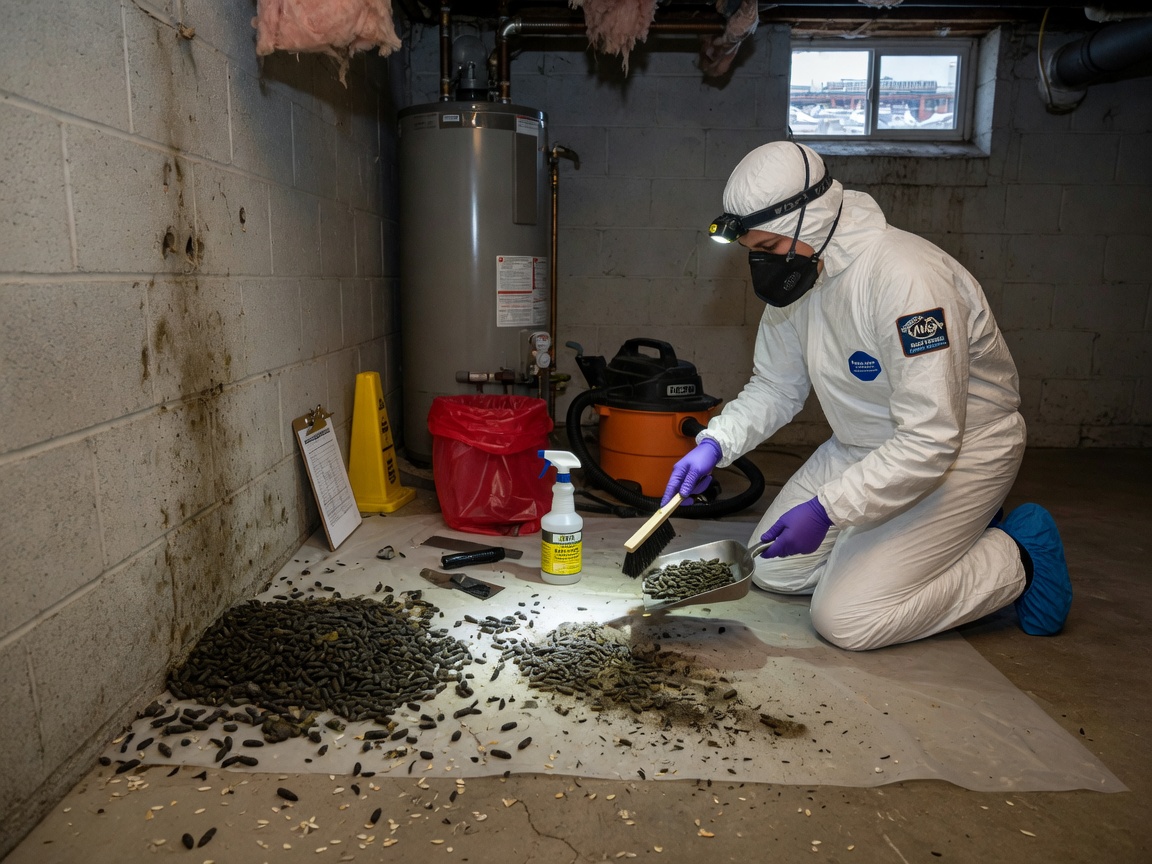
Denver's semi-arid climate with cold winters drives rodents indoors, especially into pre-1950s housing stock common in Capitol Hill, Five Points and Baker where wall voids and attic insulation trap droppings. Dried waste becomes aerosolized during disturbance, raising Hantavirus exposure in spaces with poor ventilation typical of those neighborhoods. Technicians use full PPE, negative air machines and HEPA filtration to prevent cross-contamination before any removal begins.
Thunderstorms and occasional snowmelt create moisture pockets under crawl spaces and in basements throughout Washington Park and Park Hill, causing droppings to adhere to soil and joists. This requires enzymatic cleaners and mechanical scraping rather than dry vacuuming alone. Work in Denver County often involves coordinating with property managers on multi-unit buildings where shared attics allow droppings to migrate between units.
Nearby cities like Aurora and Lakewood present similar challenges with newer tract homes that still develop rodent entry at rooflines due to rapid temperature swings. Cleanup crews must address both visible waste and hidden reservoirs in insulation and ductwork to meet health department expectations for re-occupancy.
Related Denver Services
For related cleanup needs, see our Biohazard Decontamination, Feces & Urine Cleanup, Hoarding Cleanup, Infectious Disease Decontamination service pages.
Technician insight
In Denver the thing that catches most people out with Rodent Droppings Cleanup is how quickly droppings dry and aerosolize once winter heating kicks on in brick homes built before 1940 in Capitol Hill or Baker; one good vacuum pass without containment can spread particles through the entire HVAC system.
Highland Bungalow Attic
Rodents had nested in the insulation of a 1920s Highland bungalow through a cold snap. We found several inches of dried droppings mixed with fiberglass above the bedrooms. After setting containment and removing the insulation we treated the joists and sealed the entry points at the eaves.
Rodent Droppings Cleanup Services We Offer
✓Attic Rodent Droppings Removal
Full removal of contaminated insulation and droppings from Denver attics followed by HEPA vacuuming and antimicrobial treatment to eliminate residual pathogens.
✓Crawl Space Decontamination
Extraction of droppings from soil and joists in Denver County crawl spaces with moisture control and sealing of entry points common in older Highland and Sunnyside homes.
✓Kitchen and Pantry Sanitization
Targeted cleaning of droppings and urine trails in food storage areas using food-safe disinfectants after source removal in RiNo and LoDo commercial spaces.
✓Garage and Shed Waste Cleanup
Clearance of rodent waste from storage structures in neighborhoods like Stapleton and Montclair where vehicles and equipment complicate access.
✓HVAC Contamination Removal
Ductwork inspection and cleaning of droppings that have entered systems during cold-weather nesting in Capitol Hill and Cherry Creek residences.
Rodent Droppings Cleanup Cost in Denver, CO
| Service | Typical Range | What Affects It |
|---|---|---|
| Small confined space (under 100 sq ft) | $350–$650 | Attic corners or single closet; increases with ladder access or debris volume. |
| Standard attic or crawl space | $800–$1,600 | Includes insulation removal; higher in multi-story Capitol Hill homes. |
| Kitchen or pantry area | $450–$900 | Food-safe protocols add time; common in RiNo restaurants. |
| HVAC duct cleaning add-on | $300–$700 | Required when droppings reach registers in older Denver stock. |
Ranges are typical for Denver, CO and confirmed with an exact written quote before any work starts.
How it works
- 1
Initial Assessment
Inspect affected zones in the property, identify entry points, and map droppings distribution while noting moisture or insulation conditions typical in Denver housing.
- 2
Containment Setup
Establish negative air pressure and sealed barriers to prevent aerosol spread before any disturbance in the work area.
- 3
Waste Removal
HEPA vacuum and physically remove droppings and contaminated materials, bagging waste for proper disposal.
- 4
Sanitization and Verification
Apply EPA-registered disinfectants, re-inspect, and confirm clearance before barriers are removed.
Pricing
Cost depends on square footage, access difficulty, and whether insulation or HVAC work is required.