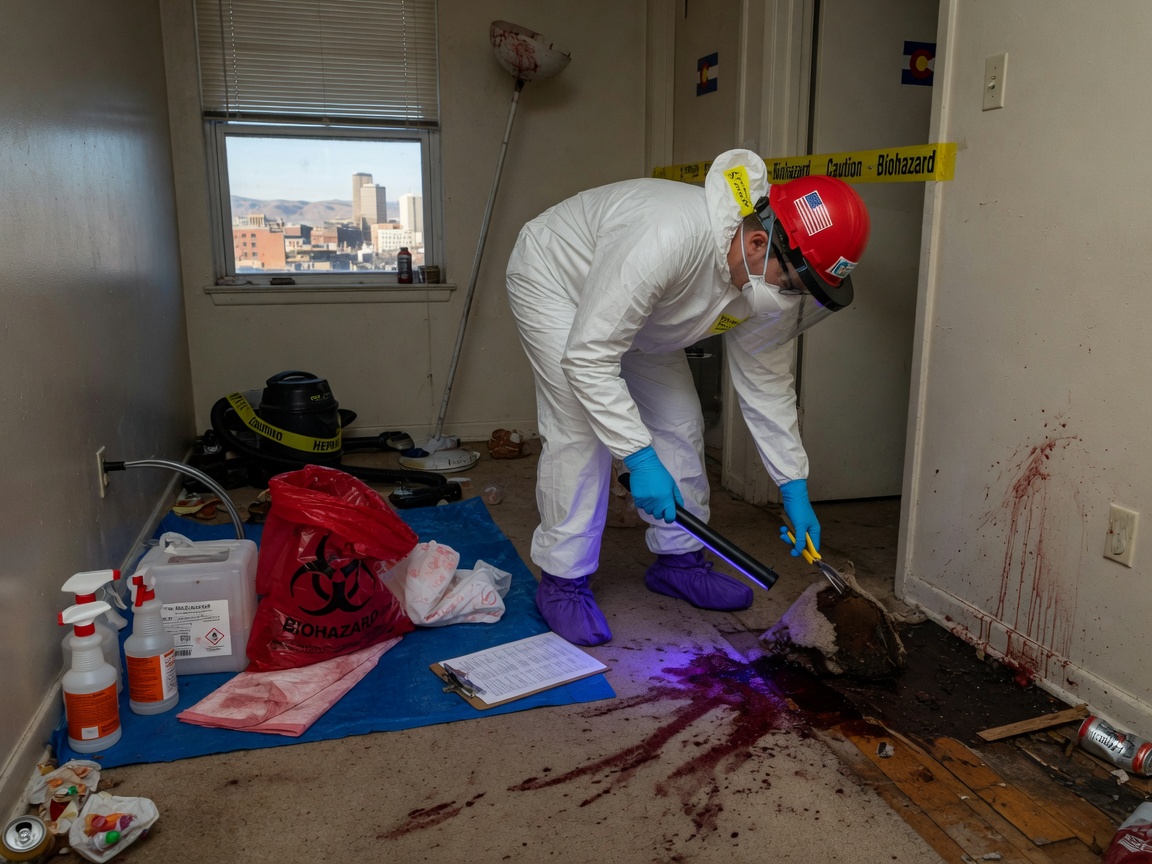
Park Hill’s early-1900s bungalows and two-story brick homes sit on narrow lots between Colorado Boulevard and Quebec Street. When a biohazard incident occurs inside these older houses, crews must navigate tight hallways, steep basement stairs, and original hardwood floors that can trap fluids. Denver BioClean Pros works room-by-room to remove contaminated materials without spreading residue to neighboring properties on the same block.
Summer thunderstorms dump heavy rain on Park Hill’s sloped yards, pushing water into crawl spaces and finished basements where older plumbing runs. Winter freezes then crack pipes, creating additional biohazard risks when sewage or blood mixes with standing water. Our teams stage equipment on East 26th Avenue or Holly Street to reach rear entrances quickly while keeping work vehicles off the narrow residential curbs.
Residents near Park Hill Branch Library and the Montview corridor expect discreet arrivals. We schedule arrivals after dark when needed and use unmarked vans so neighbors on the same street remain unaware of the situation.
Around Park Hill
We regularly work near:
- 📍Park Hill Branch Library
- 📍East 26th Avenue
- 📍Montview Boulevard
- 📍Colorado Boulevard
- 📍Park Hill Elementary School
- 📍City Park
Biohazard Cleanup Denver in Park Hill — Local Notes
- •Park Hill’s 1920s–1940s homes often have finished basements with low ceilings and limited egress, requiring smaller containment tents and extra air scrubbers during cleanup.
- •Frequent afternoon thunderstorms send runoff down the slight grade toward 23rd Avenue, so crews check exterior drains and window wells before starting interior work to avoid cross-contamination.
- •Tree-lined streets limit overhead access for lift equipment; most jobs rely on ground-level entry through side doors or garage bays common on blocks east of Colorado Boulevard.
- •Proximity to City Park means higher foot traffic on weekends; we coordinate timing around park events to keep response vehicles from blocking residential intersections.