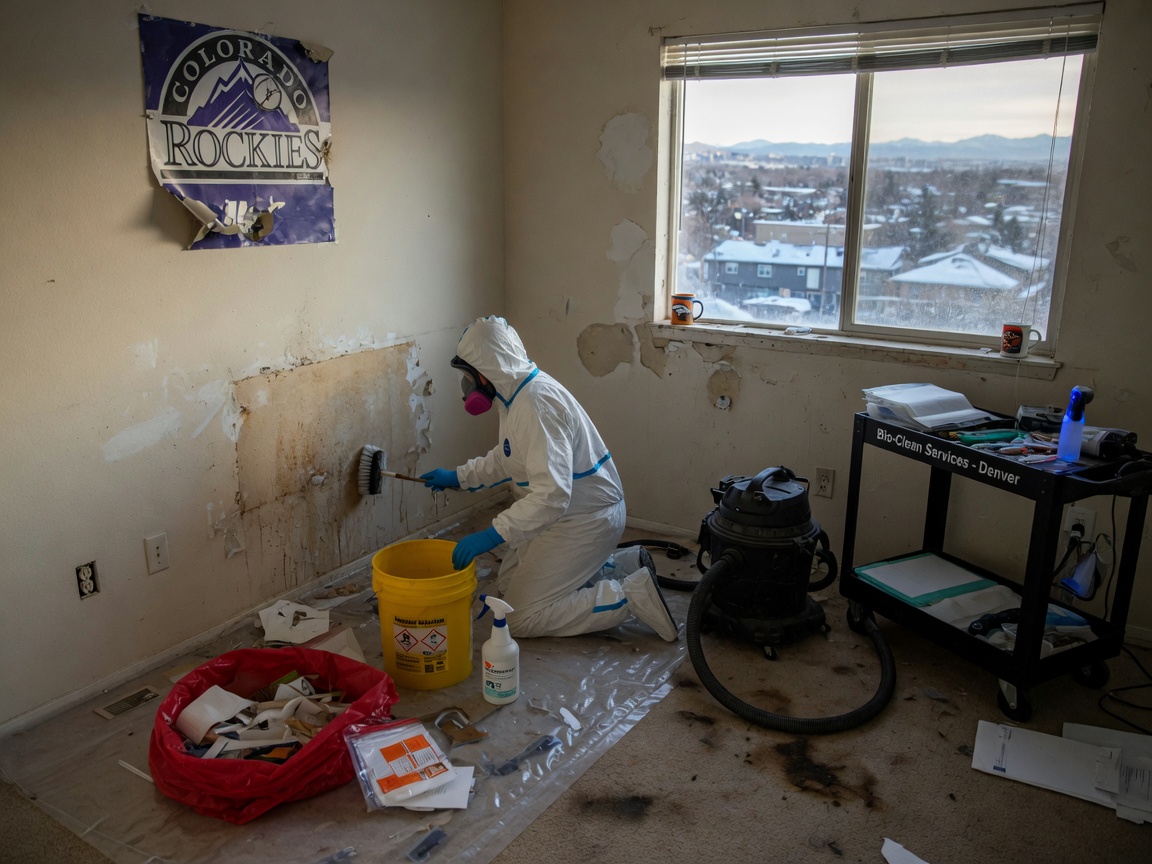
Globeville sits in Denver County with a stock of early-1900s brick and frame homes on narrow lots along 51st Avenue and Washington Street. Denver BioClean Pros responds to biohazard incidents in these tight spaces where alleys and shared fences limit equipment access and require careful containment to protect neighboring properties. Afternoon thunderstorms common in the semi-arid climate can introduce moisture that complicates drying and odor control after a traumatic event.
The neighborhood borders the South Platte River and active rail corridors, so crews must account for higher humidity pockets and occasional industrial dust that settles on surfaces. Owner-operated teams from 2171 S Grape St arrive with the right PPE and containment methods suited to these conditions rather than generic citywide approaches. Work stays focused on thorough removal and disinfection without unnecessary disruption to nearby residents in this dense industrial-residential mix.
Service calls in Globeville often involve older single-family homes and small multi-unit buildings where stairwells and basements trap contaminants. Local knowledge of drainage patterns along the river and how cold winter temperatures slow evaporation helps crews adjust drying times and prevent secondary issues.
Around Globeville
We regularly work near:
- 📍Globeville Landing Park
- 📍Garden Place Academy
- 📍51st Avenue
- 📍Washington Street
- 📍Argo Park
- 📍Globeville Recreation Center
Biohazard Cleanup Denver in Globeville — Local Notes
- •Narrow lots and alley-only rear access in many Globeville blocks require smaller containment setups and hand-carried equipment instead of large trailers.
- •Proximity to the South Platte River creates localized humidity that extends drying times after biohazard incidents, especially in unheated basements during winter.
- •Older brick and frame construction from the 1910s-1940s means more porous surfaces and hidden voids where fluids can migrate between units.
- •Frequent afternoon thunderstorms in summer can force rapid tarping and indoor moisture management to avoid cross-contamination during outdoor-to-indoor transfers.